
Summarize this blog post with: ChatGPT | Perplexity | Claude | Grok
You already know a leaking tap or blocked drain won’t fix itself, and you’ve probably started wondering what to expect when the plumber names his price. What most people don’t realize is that charges vary widely depending on how you’re billed, what’s included, and who you hire, which is exactly how homeowners end up overpaying. In this guide, you’ll learn what plumbers charge in Kenya, what drives the price, and how to get a fair quote every time.
Key Takeaways
- Plumber charges in Kenya combine labour, materials, and transport, and are billed per job, per point (outlet), or as a call-out fee plus work.
- Fundis often charge a fraction of company rates for the same labour, but companies usually offer invoices, warranties, and accountability.
- Location, urgency, job complexity, and material quality are the four biggest factors that move a quote up or down.
- Materials markup is the most common way homeowners get overcharged, so buy materials yourself or ask for an itemized materials list.
- Per-point pricing for new installations is more transparent than a lump sum.
- Three written quotes for any job beyond a minor repair is the most reliable way to confirm a fair price.
Table of Contents
What Are Plumber Charges in Kenya?
Plumber charges in Kenya are the total fees a plumber bills for a job, usually made up of labour, materials, and transport, and billed per job, per point, or as a call-out fee plus work. Plumbing cost in Kenya depends on these pieces, and plumbing rates in Kenya differ sharply between fundis, locations and companies. Always ask which of these a quote includes. Our fundi directory lists verified plumbers if you want to compare.
The Three Pricing Models
First, per-job pricing fixes one price for a defined task, such as fixing a tap or unblocking a drain. It suits small repairs with a clear scope.
Second, per-point pricing charges a set amount for each outlet (tap, shower, toilet, basin) a plumber connects. For example, one new-build job was billed at KES 1,200 per outlet across 14 outlets.
Third, call-out plus work billing is common with companies. A plumber call-out fee is a fixed charge for travelling to and assessing a job, and some plumbers waive or deduct it if you proceed with the repair. One Nairobi provider lists emergency call-outs at KES 2,500 to 4,000, while another listing shows KES 5,000 to 12,000. Confirm the fee before they travel.
How Much Does a Plumber Charge per Day in Kenya?
Most plumbers in Kenya do not quote a daily rate; they quote per job or per point. In my network, none do. Day rates appear mainly for other trades, so if a plumber insists on a day rate, ask how many days the job will take and compare that to a per-job price.
Why Does Understanding Plumber Charges Matter?
Understanding plumber charges matters because it protects you from overpaying and helps you budget before a small leak becomes an emergency. Kenyans commonly bargain with fundis, so many fundis quote high to leave room to negotiate. If you don’t know the real range, you can’t tell a padded quote from a fair one.
In addition, knowing prices helps landlords and tenants agree who pays for repairs. For example, a KES 500 drain clearing is easy to approve, but a KES 95,000 quote needs scrutiny.
How Much Does a Plumber Charge in Kenya in 2026?
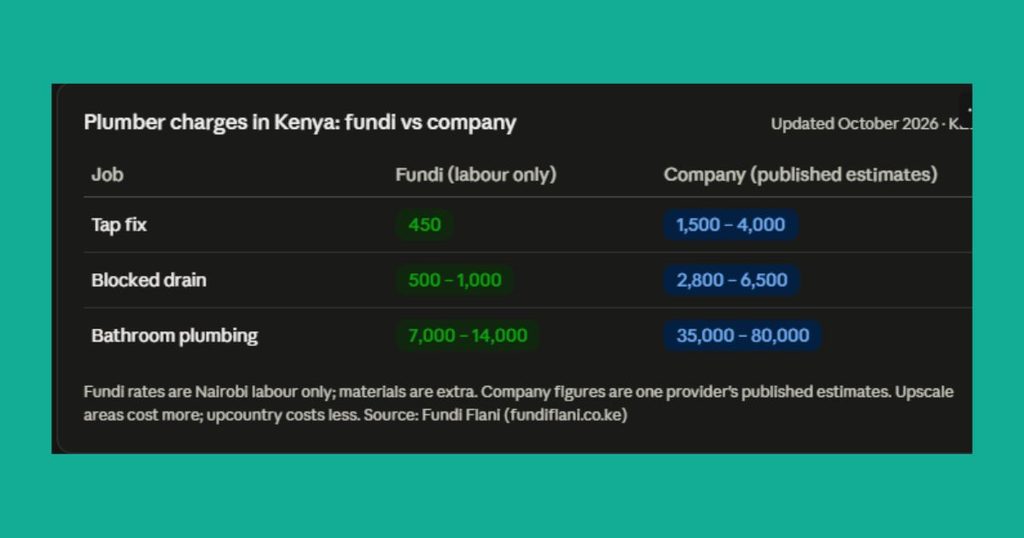
How much a plumber costs in Kenya in 2026 ranges from under KES 1,000 for basic fundi repairs to KES 35,000 or more for company-installed bathrooms.
Fundi labour rates (Nairobi, from my experience running Fundi Flani):
| Job | Typical Fundi Labour (KES) |
|---|---|
| Tap fix | 450 |
| Blocked drain | 500 – 1,000 |
| Bathroom plumbing (labour) | 7,000 – 14,000 |
Company estimates (published Nairobi price lists):
| Job | Typical Range (KES) |
|---|---|
| Tap or faucet repair | 1,500 – 4,000 |
| Blocked drain or severe blockage | 2,800 – 6,500 |
| Burst pipe repair | 3,500 – 8,000 |
| Water heater (geyser) installation | 8,000 – 25,000 |
| Water tank installation | 15,000 – 50,000 |
| Complete bathroom plumbing | 35,000 – 80,000 |
The company figures come from one Nairobi provider’s price list and its emergency pricing page. They are one provider’s published estimates, not a government tariff, and they typically include company overheads. Fundi figures are labour only; materials are extra.
[Insert image: Side-by-side infographic of fundi vs company rates with the update date | Alt text: “Compare fundi and company plumber charges in Kenya”]
How Much Does It Cost to Fix a Leaking Pipe or Tap in Kenya?
Fixing a tap with a fundi costs about KES 450 in labour, while companies list KES 1,500 to 4,000 per fixture. Leaking pipes cost more because the plumber must trace the leak. Fix leaks early, since a small leak can turn into a burst pipe and a company-rate repair.
How Much Does It Cost to Unblock a Drain or Toilet in Kenya?
Unblocking a drain with a fundi costs about KES 500 to 1,000, while companies list KES 2,800 to 6,500 for severe blockages. Deep sewer-line problems cost more because they need equipment and time.
How Much Does It Cost to Install a Water Tank or Geyser in Kenya?
Installing a water tank costs KES 15,000 to 50,000 at company rates, and a geyser KES 8,000 to 25,000, according to published estimates. These exclude the tank or heater itself. A fundi may charge much less for connection labour, so ask for a quote for the connection alone.
How Much Does Bathroom Plumbing Cost in Kenya?
Bathroom plumbing labour with a fundi runs about KES 7,000 to 14,000, while companies list KES 35,000 to 80,000 per bathroom. The gap reflects overheads, warranties, and who supplies materials. Fixtures and tiling are extra in both cases.
What Factors Affect What a Plumber Charges?
Four factors affect plumber charges most: location, job complexity, material quality, and urgency. Accessibility matters too. For example, a leak behind a tiled wall costs more than one under an open sink.
Why Are Plumbers More Expensive in Nairobi Than in Other Towns?
Plumbers cost more in Nairobi because living costs and demand are higher, and Nairobi is generally more expensive than other Kenyan cities. Upscale estates such as Runda attract higher quotes still. Upcountry towns are usually cheaper, but remote areas like Garissa and Lodwar can cost more because of high living costs and the distance from supplier lines.
Does Urgency Change the Price?
Emergency or after-hours plumbing in Kenya generally costs more than scheduled work because plumbers charge a premium for urgency and short notice. For example, a night-time burst pipe attracts a call-out fee a daytime repair avoids. For urgent help, see our emergency plumber in Nairobi page.
Is It Cheaper to Hire a Fundi or a Plumbing Company in Kenya?
A fundi is usually cheaper than a plumbing company, but a company usually offers invoices, warranties, and accountability. For example, a tap fix is about KES 450 with a fundi, versus KES 1,500 or more from a company.
- Choose a fundi for small, clear repairs where you can inspect the result.
- Choose a company for hidden work behind walls or when you need a written warranty.
At Fundi Flani, I verify fundis using reviews and ratings. You can compare options in our roundup of the top plumbing companies in Nairobi. Note that plumber salary in Kenya, which is roughly KES 36,622 to 113,952 per month for employed plumbers, is different from what clients are charged, and what a plumber is paid by an employer is not the same as a quote.
Should You Buy Plumbing Materials Yourself or Let the Plumber Do It?
You should usually buy materials yourself, because materials markup is the most common way homeowners get overcharged in Kenya. In my experience, many fundis choose cheap materials so they can keep a markup. For example, PVC pipe is listed at KES 200 to 500 per metre, so check shop prices yourself.
Moreover, write brand and grade into the quote. If you let the plumber buy for you, ask for receipts. That way you pay for what actually goes into your walls.
How Much Is a Water Pipe in Kenya?
Water pipe prices in Kenya depend on the material and brand, and PVC pipe is listed at about KES 200 to 500 per metre. PPR pipe, which needs heat-fusion fitting, costs more and varies by brand and class. In my experience, buying branded PPR and Class D PVC directly from a supplier in a larger town like Kisumu protected me from cheap-material markups.
If you have a few real PPR prices per metre from suppliers, add them here. I have no reliable source for them, so I didn’t write any.
How Do You Know If a Plumber’s Quote Is Fair?
A plumber’s quote is fair when it is itemized, matches market ranges, and sits close to two other written quotes. Pricing a plumbing job in Kenya involves comparing at least three itemized written quotes that separate labour from materials and state the full scope of work.
Itemized Quote Checklist
First, check that the quote lists:
- Labour, as a per-point or per-job rate
- A materials list with brands and quantities
- Transport and any call-out fee
- The exact scope, plus what is excluded
- Payment terms and a completion date
Red Flags to Watch For
Next, watch for a single lump sum with no breakdown, pressure to pay everything upfront, vague claims that a job will “take weeks,” and refusal to name materials.
What Does a Real Plumbing Quote Look Like?
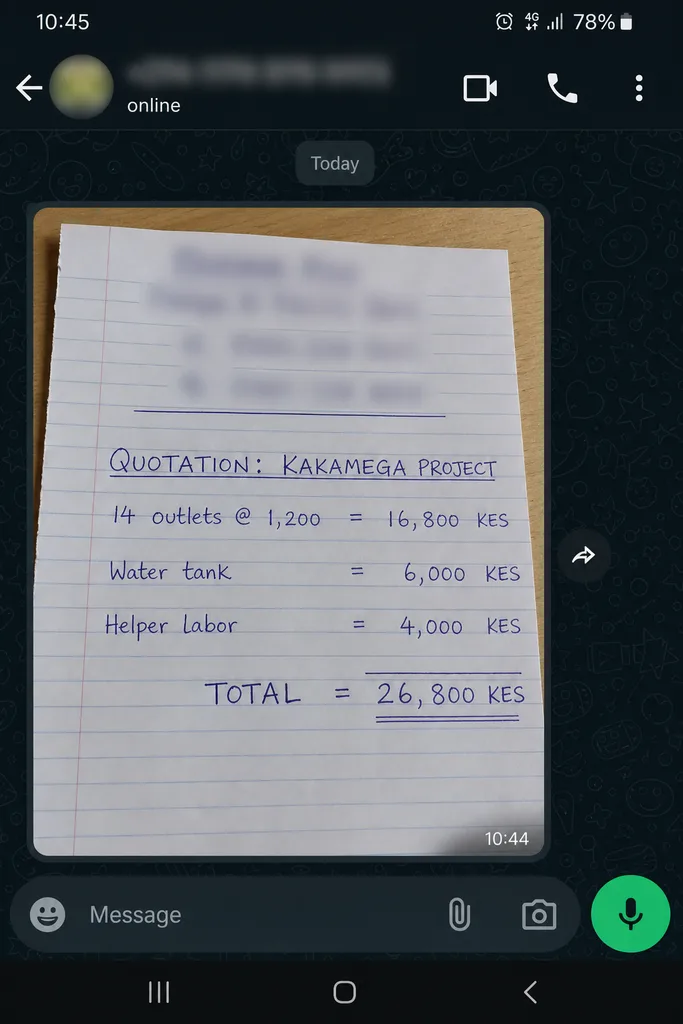
A real plumbing quote breaks the job into labour per point and extras. Here is a real example from my own house build in Kakamega. I bought the materials myself (PPR and Class D PVC from Kisumu) and only needed labour.
The first plumber quoted a lump sum of KES 95,000, claiming three weeks of heat-fusion work. He likely assumed that because I work for an NGO, I had money to spare. I walked away and hired a certified plumber recommended to me, who quoted per point:
| Item | Cost (KES) |
|---|---|
| 14 plumbing outlets at KES 1,200 | 16,800 |
| Connecting the external water tank | 6,000 |
| Helper (mtu wa mkono) | 4,000 |
| Total labour | 26,800 |
The work was done in five days. The lesson: ask for a per-point breakdown, and keep your professional background private when negotiating. Materials were not part of this total.
[Insert image: Photo or scan of the per-point quote | Alt text: “Compare per-point plumbing quotes in Kenya”]
How Do You Find a Reliable Plumber Near You in Nairobi?
You can find a reliable plumber in Nairobi through verified directories, referrals, and reviews. Use our plumber near me page for listings with reviews and ratings. Free options include neighbour referrals and Google Maps reviews. You can also search in Swahili: our fundi wa maji Nairobi page covers it.
What’s Next: Your Action Plan
Your action plan is five steps: define the job, get three quotes, verify references, agree a written scope, and keep receipts.
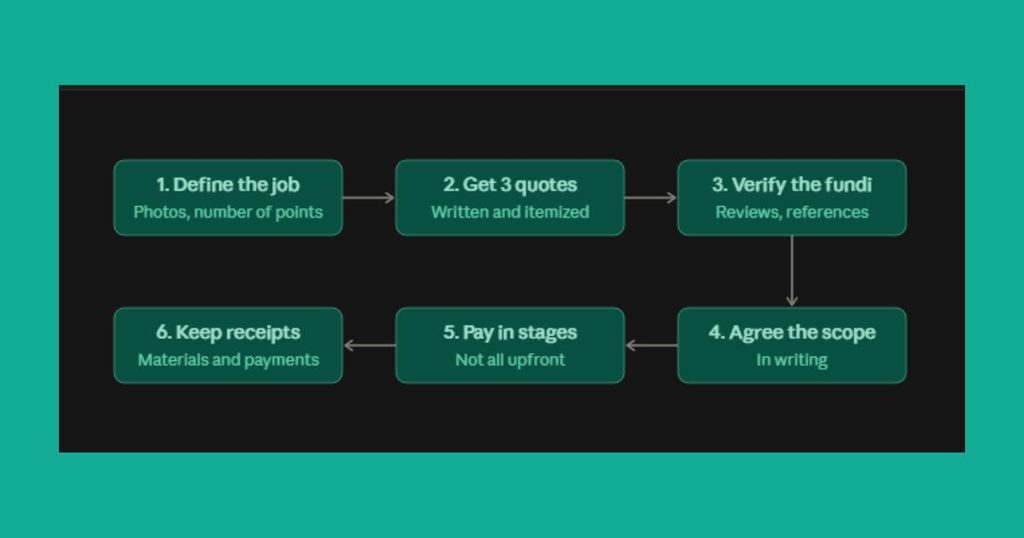
- Define the job, with photos and a count of points.
- Get three written quotes using the checklist above.
- Verify references and read recent reviews.
- Agree the scope in writing, and pay in stages.
- Keep receipts for materials and payments.
Finally, prevent costly repairs by following our home maintenance checklist.
Conclusion
A fair price comes from knowing the numbers, and a prepared homeowner gets better work at a better price. Know the pricing models, buy or verify your materials, ask for per-point breakdowns, and compare three quotes. Start today: list your job, request your quotes, and negotiate with confidence.
Disclaimer: This article was initially drafted using AI assistance. It was then edited, fact-checked against the linked sources, and expanded with first-hand experience by the author.
About The Author
